Edutarbiyah English Blog A Trusted Resource for Parenting, Islamic Tarbiyah & Personal Development
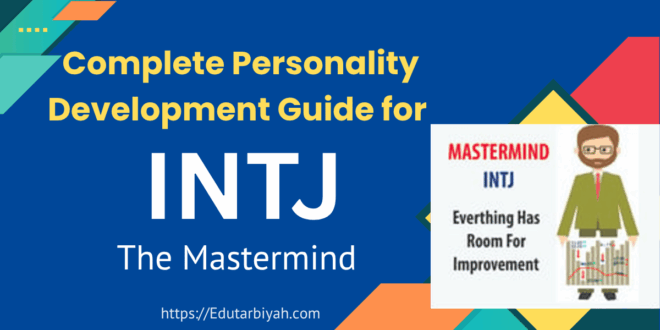
The INTJ personality type is one of the most strategic, independent, analytical, and future-focused personalities in the MBTI system. Often called “The Mastermind” or “The Architect,” INTJs are known for their deep thinking, long-term planning, intellectual curiosity, and desire to improve systems.
This Personality Development Guide for INTJ is written for teenagers, university students, professionals, parents, teachers, mentors, and personal development enthusiasts who want to understand the INTJ personality type deeply.
MBTI, or the Myers-Briggs Type Indicator, is a personality framework that explains how people gain energy, gather information, make decisions, and organize their lives. Understanding your MBTI type can increase self-awareness, improve relationships, support career guidance, and help you design a better personal growth roadmap.
INTJs are not simply “smart” or “serious” people. They are vision-builders. They naturally look beyond the present moment and ask: What is the best strategy? How can this system be improved? What is the long-term result? What is the most logical solution?
However, INTJs also have blind spots. They may struggle with emotional expression, relationship warmth, patience with others, perfectionism, and overthinking. This Personality Development Guide for INTJ will help INTJs understand their strengths and weaknesses, develop emotional intelligence, improve communication, and become the healthiest version of themselves.
What Does INTJ Mean?
INTJ stands for Introversion, Intuition, Thinking, and Judging.
I – Introversion
INTJs gain energy from solitude, reflection, reading, learning, planning, and independent work. They may enjoy meaningful conversations, but too much social interaction can drain them. INTJs often need private time to think deeply and recharge.
N – Intuition
INTJs focus on patterns, meanings, possibilities, strategies, and future outcomes. They are less interested in surface-level details unless those details serve a bigger purpose. Their minds naturally connect ideas and predict future consequences.
T – Thinking
INTJs make decisions through logic, analysis, objectivity, and rational evaluation. They value truth over comfort and efficiency over emotional approval. This makes them strong problem-solvers, but sometimes others may experience them as cold or overly critical.
J – Judging
INTJs prefer structure, planning, goals, and long-term direction. They do not like wasting time. They usually want clarity, strategy, and measurable progress.
Cognitive Preferences of INTJ
A deeper INTJ personality development guide must include cognitive functions because they explain how INTJs process the world.
Dominant Function: Introverted Intuition
Introverted Intuition helps INTJs see patterns, predict outcomes, and form long-term visions. This function makes them strategic and future-focused. INTJs often see what others miss.
Auxiliary Function: Extraverted Thinking
Extraverted Thinking helps INTJs organize ideas into systems, plans, and results. They want ideas to become practical, efficient, and useful.
Tertiary Function: Introverted Feeling
Introverted Feeling gives INTJs private values and inner convictions. They may not express emotions openly, but they often have deep personal principles.
Inferior Function: Extraverted Sensing
This is often the INTJ’s growth area. INTJs may struggle to live in the present moment, enjoy physical experiences, or respond flexibly to sudden external changes.
Overview of INTJ – The Mastermind
Nickname
The Mastermind or The Architect.
Core Motivation
To understand, improve, organize, and master complex systems.
Core Fear
Being incompetent, dependent, controlled, misunderstood, or trapped in meaningless work.
Core Values
INTJs usually value:
- Knowledge
- Competence
- Independence
- Strategy
- Truth
- Efficiency
- Vision
- Self-mastery
- Excellence
- Long-term growth
Life Mission
The life mission of an INTJ is to create better systems, solve meaningful problems, pursue mastery, and build a future based on wisdom, logic, and purpose.
Key Characteristics of INTJ
Thinking Style
INTJs think deeply, strategically, and conceptually. They are interested in causes, patterns, frameworks, and long-term consequences.
Communication Style
INTJs communicate directly and logically. They prefer meaningful discussions over casual small talk. They may speak less, but when they speak, they often try to be precise and useful.
Learning Style
INTJs learn best through independent study, conceptual frameworks, deep research, problem-solving, and intellectual challenges.
Work Style
INTJs prefer autonomy, clear goals, high standards, and meaningful work. They dislike micromanagement, inefficiency, and repeated unnecessary tasks.
Decision-Making Style
INTJs make decisions based on logic, strategy, evidence, and long-term outcomes. They may consider emotions, but emotions usually do not lead their decisions.
Greatest Strengths of INTJ
This Personality Development Guide for INTJ helps INTJs recognize and use their natural gifts wisely.
1. Strategic Thinking
INTJs naturally think several steps ahead.
Example: An INTJ student may not only study for exams but also plan which skills will help in university, career, and long-term success.
2. Independence
INTJs are comfortable working alone and making their own decisions. They do not need constant approval.
3. Intellectual Curiosity
They love learning, researching, analyzing, and improving their understanding.
4. Long-Term Vision
INTJs can see future possibilities clearly and plan accordingly.
5. Problem-Solving Ability
They are excellent at identifying weaknesses in systems and creating better solutions.
6. High Standards
INTJs expect quality from themselves and others.
7. Self-Discipline
When committed to a goal, they can work consistently and intensely.
8. Objectivity
They can analyze situations without being overly influenced by emotions.
9. Innovation
INTJs often create new models, strategies, and systems.
10. Determination
Once they believe in a goal, they pursue it with strong focus.
Common Weaknesses and Challenges
Every personality type has strengths and weaknesses. INTJs grow when they understand both.
1. Emotional Distance
INTJs may struggle to express warmth, affection, or vulnerability.
2. Over-Criticism
They quickly notice flaws and inefficiencies, which can make others feel judged.
3. Perfectionism
Their high standards can become unrealistic.
4. Impatience
INTJs may become frustrated with slow learners, emotional decisions, or inefficient processes.
5. Difficulty Trusting Others
They may believe others will not meet their standards.
6. Social Withdrawal
INTJs may isolate themselves too much.
7. Overthinking
Their minds can become trapped in analysis and future planning.
8. Resistance to Authority
INTJs dislike authority that lacks competence.
9. Neglecting the Present
They may focus so much on future goals that they ignore present relationships, health, or joy.
10. Harsh Communication
Their honesty can sometimes sound cold or insensitive.
Blind Spots of INTJ
A key part of this Personality Development Guide for INTJ is helping INTJs see what they may not easily notice.
Blind Spot 1: Assuming Logic Is Always Enough
Logic is powerful, but people are not machines. Emotions, relationships, values, and timing also matter.
Blind Spot 2: Underestimating Emotional Needs
INTJs may assume that if something is true, it should be accepted. But people often need empathy before advice.
Blind Spot 3: Becoming Too Independent
Independence is a strength, but isolation can limit growth. INTJs also need collaboration, feedback, and emotional support.
Blind Spot 4: Judging Others Too Quickly
INTJs may dismiss people who appear irrational, emotional, or inefficient. This can damage relationships.
Blind Spot 5: Living Only in the Future
Future planning is useful, but life is also happening today.
How INTJs Can Overcome Blind Spots
- Listen before correcting.
- Validate emotions before offering solutions.
- Ask others for feedback.
- Practice patience with different personality types.
- Spend time in present-moment activities.
- Learn to communicate truth with kindness.
Emotional Growth Areas
Emotional intelligence is one of the most important development areas for INTJs.
Emotional Intelligence Challenges
INTJs may understand systems better than emotions. They may feel uncomfortable when people express sadness, fear, confusion, or emotional pain. They may try to solve the problem quickly instead of simply listening.
Self-Awareness Development
INTJs should regularly ask:
- What am I feeling right now?
- Why am I reacting strongly?
- Am I avoiding vulnerability?
- Am I using logic to hide emotion?
- What emotional need am I ignoring?
Self-Regulation Strategies
- Pause before responding.
- Journal your thoughts and feelings.
- Practice naming emotions.
- Exercise regularly.
- Spend time in nature.
- Discuss emotions with a trusted person.
- Avoid making major decisions when angry.
A mature INTJ is not emotionless. A mature INTJ understands emotions and uses them wisely.
Relationship Guide for INTJ
INTJ as a Spouse
INTJs are loyal, thoughtful, committed, and protective partners. They may not always express love emotionally, but they often show love through planning, problem-solving, financial responsibility, loyalty, and practical support.
Challenges may include emotional distance, direct criticism, and difficulty understanding a partner’s emotional needs.
Growth tips:
- Say appreciation openly.
- Listen without fixing immediately.
- Ask your spouse what they need emotionally.
- Share your thoughts and feelings.
- Plan quality time, not only future goals.
INTJ as a Parent
INTJ parents often encourage independence, competence, learning, and critical thinking. They may help children become disciplined and intellectually strong.
However, they must be careful not to become too demanding or emotionally unavailable.
Growth tips:
- Praise effort, not only achievement.
- Allow children to express feelings.
- Avoid expecting adult-level logic from children.
- Balance discipline with affection.
- Understand each child’s personality type.
INTJ as a Friend
INTJs are loyal and intellectually stimulating friends. They may have a small circle, but they value depth and honesty.
Growth tips:
- Initiate contact sometimes.
- Show care through words, not only advice.
- Accept friends who are different from you.
INTJ as a Colleague
INTJs are valuable colleagues because they improve systems, solve problems, and think strategically.
Growth tips:
- Respect emotional team dynamics.
- Explain your ideas patiently.
- Avoid sounding superior.
- Appreciate others’ contributions.
Communication Improvement Tips
- Be direct but gentle.
- Use empathy before analysis.
- Avoid correcting every mistake.
- Ask questions before giving advice.
- Remember that tone matters.
- Appreciate people publicly and correct privately.
Career Development Guide for INTJ
A strong Personality Development Guide for INTJ must include career guidance because INTJs often connect success with mastery and meaningful achievement.
Best Careers for INTJ
INTJs usually perform well in careers that require strategy, analysis, systems thinking, independence, and innovation.
Suitable careers include:
- Scientist
- Researcher
- Engineer
- Architect
- Software developer
- Data analyst
- Business strategist
- Entrepreneur
- University professor
- Psychologist
- Consultant
- Financial analyst
- Lawyer
- Project manager
- Product manager
- Systems analyst
- Policy analyst
- Writer
- Medical specialist
- Technology leader
Careers That May Feel Draining
INTJs may feel drained in careers that are repetitive, chaotic, overly social, emotionally demanding, or lacking intellectual challenge.
Examples may include:
- Routine clerical jobs
- Highly emotional customer service roles
- Jobs with unclear systems
- Workplaces with incompetent leadership
- Roles with constant small talk and no autonomy
Leadership Strengths
INTJ leaders are strategic, visionary, independent, and improvement-focused. They can see where an organization should go and how to get there.
Workplace Challenges
INTJs may struggle with:
- Office politics
- Emotional management
- Slow decision-making
- Inefficient meetings
- Micromanagement
- Team members who need frequent emotional reassurance
Career Growth Roadmap
- Build deep expertise.
- Develop communication skills.
- Learn emotional leadership.
- Practice collaboration.
- Build public speaking confidence.
- Learn to delegate.
- Create long-term strategic goals.
- Mentor others with patience.
Parenting an INTJ Child
INTJ children are often curious, independent, private, intense, and mentally mature. They may ask deep questions, enjoy books or complex topics, and dislike being treated like they cannot think for themselves.
How Parents Should Nurture an INTJ Child
- Respect their need for privacy.
- Give logical explanations.
- Encourage independent learning.
- Provide intellectual challenges.
- Allow them to ask questions.
- Teach emotional expression gently.
- Avoid unnecessary control.
Common Parenting Mistakes
- Forcing too much social activity.
- Dismissing their deep questions.
- Calling them rude when they are simply direct.
- Controlling every decision.
- Ignoring their emotional sensitivity.
- Comparing them with more expressive children.
Educational Recommendations
INTJ children learn best through:
- Independent projects
- Research assignments
- Conceptual learning
- Problem-solving
- Advanced reading
- Science, technology, philosophy, strategy, and creative systems
Teachers should challenge their minds while also helping them develop teamwork, humility, and communication.
Personal Development Roadmap for INTJ
This Personality Development Guide for INTJ becomes practical when it gives a clear growth plan.
Daily Habits
- Read or learn something meaningful.
- Review your long-term goals.
- Exercise for physical balance.
- Practice one emotional check-in.
- Appreciate one person.
- Spend time away from screens.
- Complete one important task.
Weekly Habits
- Reflect on progress.
- Connect with a friend or family member.
- Try one new experience.
- Review your habits.
- Learn one communication skill.
- Work on a meaningful project.
- Rest intentionally.
Mindset Shifts
From: “Emotions are irrational.”
To: “Emotions are information.”
From: “If people were smarter, things would be easier.”
To: “Different people bring different strengths.”
From: “I must master everything alone.”
To: “Healthy collaboration increases success.”
From: “Only the future matters.”
To: “The present also deserves attention.”
Skills INTJs Should Learn
- Emotional intelligence
- Empathy
- Conflict resolution
- Public speaking
- Team leadership
- Delegation
- Active listening
- Stress management
- Creative collaboration
- Practical spirituality
Books to Read
INTJs may benefit from books about:
- Leadership
- Emotional intelligence
- Systems thinking
- Psychology
- Communication
- Habits
- Strategy
- Spiritual growth
- Personal development
Habits to Avoid
- Over-isolation
- Harsh criticism
- Perfectionism
- Emotional avoidance
- Overthinking
- Ignoring health
- Looking down on others
- Working without rest
- Rejecting help
- Living only in the future
Spiritual and Character Development
Personality development is incomplete without character development.
Humility
INTJs must remember that intelligence is a gift, not a reason for arrogance. True wisdom includes humility.
Discipline
INTJs naturally value discipline. They should use it not only for success but also for service and self-purification.
Patience
Not everyone thinks as quickly or strategically as an INTJ. Patience improves relationships and leadership.
Gratitude
Because INTJs often focus on what can be improved, they may forget to appreciate what already exists.
Purpose-Driven Living
INTJs become powerful when their vision serves a meaningful purpose beyond personal success.
How INTJ Can Become Their Best Version
The healthiest INTJ is strategic but humble, logical but compassionate, independent but connected, visionary but present.
Step-by-Step Growth Plan
Step 1: Accept Your Nature
You do not need to become loud, emotional, or overly social. Your depth, vision, and independence are strengths.
Step 2: Develop Emotional Intelligence
Learn to understand your own emotions and the emotions of others.
Step 3: Communicate with Warmth
Truth becomes more effective when delivered with respect.
Step 4: Practice Flexibility
Not every plan will work perfectly. Adaptability is a sign of intelligence.
Step 5: Build Relationships
Success without meaningful relationships can feel empty.
Step 6: Balance Future and Present
Plan for tomorrow, but live responsibly today.
Step 7: Use Your Vision for Service
The best INTJs use their intelligence to solve real problems and benefit others.
This is the heart of the Personality Development Guide for INTJ: transform intelligence into wisdom, strategy into service, and independence into meaningful leadership.
Famous INTJ Personalities
Public typing is not always certain, but the following figures are often associated with INTJ traits:
- Elon Musk
- Nikola Tesla
- Isaac Newton
- Friedrich Nietzsche
- Mark Zuckerberg
- Stephen Hawking
- Ayn Rand
- Christopher Nolan
Lessons We Can Learn from INTJ Personalities
- Vision can change the world.
- Deep focus creates mastery.
- Independent thinking produces innovation.
- Strategy matters.
- Intelligence needs emotional balance.
Frequently Asked Questions
1. What is the INTJ personality type?
INTJ is one of the 16 MBTI personality types. It stands for Introversion, Intuition, Thinking, and Judging. INTJs are strategic, analytical, independent, and future-focused.
2. Why is INTJ called The Mastermind?
INTJs are called The Mastermind because they naturally think strategically, plan long-term, and improve systems.
3. What are the main strengths of INTJ?
INTJ strengths include strategic thinking, independence, problem-solving, intellectual curiosity, discipline, vision, and innovation.
4. What are the weaknesses of INTJ?
Common INTJ weaknesses include emotional distance, harsh criticism, perfectionism, impatience, social withdrawal, and overthinking.
5. Are INTJs emotional?
Yes, INTJs have emotions, but they often process them privately and may not express them easily.
6. What careers are best for INTJ?
INTJs often succeed in careers involving strategy, research, technology, science, engineering, entrepreneurship, consulting, and leadership.
7. How can INTJs improve relationships?
INTJs can improve relationships by listening emotionally, expressing appreciation, softening criticism, and making time for loved ones.
8. How should parents raise an INTJ child?
Parents should respect their independence, provide intellectual challenge, give logical explanations, and teach emotional expression.
9. What stresses INTJs most?
INTJs are often stressed by incompetence, inefficiency, emotional drama, micromanagement, lack of autonomy, and meaningless work.
10. What is the best personal development path for INTJ?
The best path includes emotional intelligence, humility, communication skills, flexibility, relationship building, and purpose-driven leadership.
Final Thoughts
The INTJ personality type is one of the most visionary, strategic, independent, and intellectually powerful personality types. INTJs are natural planners, thinkers, innovators, and system-builders. They can solve complex problems, design future possibilities, and create meaningful change.
However, true growth for INTJs is not only about becoming smarter or more successful. It is about becoming wiser, warmer, humbler, and more emotionally balanced.
This Personality Development Guide for INTJ shows that INTJs do not need to change their core personality. They need to refine it. Their logic should become compassionate. Their strategy should become service-oriented. Their independence should become balanced with connection. Their vision should be grounded in character and purpose.
Key Takeaways
- INTJs are strategic, independent, logical, and future-focused.
- Their greatest strengths are vision, intelligence, problem-solving, and self-discipline.
- Their main challenges are emotional distance, perfectionism, criticism, and overthinking.
- INTJs grow through emotional intelligence, communication, humility, and flexibility.
- INTJ children need respect, intellectual challenge, privacy, and emotional guidance.
- INTJs can become powerful leaders when they combine strategy with empathy.
- The healthiest INTJ is wise, purposeful, emotionally mature, and service-driven.
Personal Development Challenge for INTJs
For the next seven days, practice this simple habit:
Before giving advice, first ask: “Do you want a solution, or do you just want me to listen?”
This one habit can transform INTJ communication, relationships, parenting, teaching, leadership, and emotional intelligence.
True personality development begins when insight becomes action.