Edutarbiyah English Blog A Trusted Resource for Parenting, Islamic Tarbiyah & Personal Development
Why do some people naturally take charge, set ambitious goals, and confidently lead others toward success? Why are certain individuals constantly focused on efficiency, strategy, and long-term achievement?
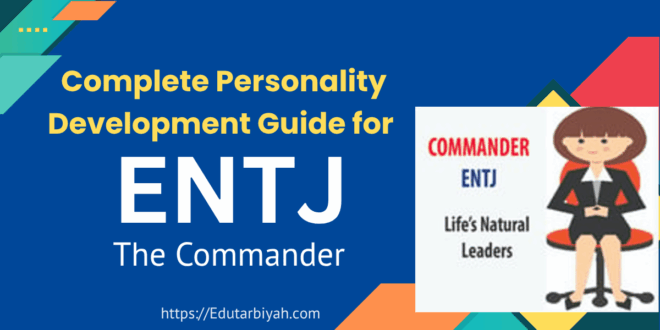
If this sounds familiar, you may belong to the ENTJ Personality Type, often known as The Commander.
This comprehensive Personality Development Guide for ENTJ is designed to help ENTJs understand themselves deeply, maximize their strengths, overcome weaknesses, improve relationships, and achieve extraordinary personal and professional success.
Whether you are a teenager exploring your identity, a university student planning your future, a professional seeking career growth, a parent raising an ENTJ child, or simply interested in personality development, this guide will provide valuable insights and practical action steps.
What is MBTI?
The Myers-Briggs Type Indicator (MBTI) is one of the most popular personality frameworks in the world. Based on the psychological theories of Carl Jung, MBTI identifies sixteen personality types based on four preference pairs:
- Extraversion (E) vs Introversion (I)
- Intuition (N) vs Sensing (S)
- Thinking (T) vs Feeling (F)
- Judging (J) vs Perceiving (P)
Understanding your personality type increases:
- Self-awareness
- Emotional intelligence
- Relationship improvement
- Career guidance
- Personal growth
- Leadership effectiveness
Brief Introduction to ENTJ
ENTJs are natural leaders. They are visionary thinkers who enjoy creating systems, solving complex problems, and turning ideas into reality.
The ENTJ Personality Type is often characterized by:
- Confidence
- Strategic thinking
- Determination
- Leadership
- Ambition
- Efficiency
They are frequently found leading businesses, organizations, teams, and social movements.
What Does ENTJ Mean?
Extraverted (E)
ENTJs gain energy from engaging with people, leading teams, and influencing their environment.
Example
An ENTJ may enjoy organizing a group project and naturally take responsibility for achieving results.
Intuitive (N)
They focus on future possibilities rather than immediate realities.
Example
Instead of asking, “What is happening now?” they ask, “What could happen five years from now?”
Thinking (T)
ENTJs prioritize logic, facts, and objective analysis when making decisions.
Example
They evaluate solutions based on effectiveness rather than emotions.
Judging (J)
They prefer structure, planning, organization, and clear goals.
Example
Most ENTJs enjoy creating schedules, strategies, and measurable objectives.
Cognitive Preferences Behind ENTJ
Dominant Function: Extraverted Thinking (Te)
This function drives:
- Efficiency
- Organization
- Leadership
- Goal achievement
Auxiliary Function: Introverted Intuition (Ni)
This function supports:
- Strategic planning
- Long-term vision
- Pattern recognition
Tertiary Function: Extraverted Sensing (Se)
This function contributes:
- Decisiveness
- Action orientation
- Awareness of opportunities
Inferior Function: Introverted Feeling (Fi)
This function relates to:
- Personal values
- Emotional awareness
- Authenticity
Many ENTJs spend years developing this aspect of themselves.
Overview of ENTJ
Nickname
The Commander
Core Motivation
To achieve meaningful goals and create impactful results.
Core Fear
Being ineffective, incompetent, or unable to reach their potential.
Core Values
- Excellence
- Achievement
- Competence
- Growth
- Leadership
Life Mission
To build, lead, improve, and transform systems, organizations, and communities.
Key Characteristics of ENTJ
Thinking Style
ENTJs think strategically.
They constantly ask:
- How can this be improved?
- What is the most efficient solution?
- What is the long-term impact?
Communication Style
Their communication is:
- Direct
- Clear
- Assertive
- Goal-oriented
Learning Style
ENTJs learn best through:
- Challenges
- Problem-solving
- Real-world application
- Leadership opportunities
Work Style
They are:
- Organized
- Ambitious
- Productive
- Results-focused
Decision-Making Style
ENTJs make decisions based on:
- Logic
- Evidence
- Efficiency
- Long-term outcomes
Greatest Strengths of ENTJ
A complete Personality Development Guide for ENTJ must begin with understanding their exceptional strengths.
1. Natural Leadership
People often look to ENTJs for direction.
Example
An ENTJ student may naturally become team leader during group assignments.
2. Strategic Thinking
They excel at long-term planning.
Example
Creating a five-year business growth plan.
3. Confidence
ENTJs trust their abilities and decisions.
4. Goal Orientation
They pursue objectives relentlessly.
5. Strong Problem-Solving Skills
Complex challenges energize them.
6. Efficiency
They constantly improve systems and processes.
7. Decisiveness
They make decisions quickly and confidently.
8. High Standards
They push themselves and others toward excellence.
9. Visionary Leadership
They see possibilities others overlook.
10. Resilience
ENTJs recover quickly from setbacks and continue moving forward.
Common Weaknesses and Challenges
Like every personality type, ENTJs also have weaknesses.
1. Impatience
They may become frustrated with slower individuals.
2. Overconfidence
Confidence can occasionally become arrogance.
3. Insensitivity
Logic may overshadow empathy.
4. Workaholism
Achievement can become an obsession.
5. Control Issues
ENTJs often prefer doing things their way.
6. Difficulty Expressing Emotions
They may struggle to discuss vulnerable feelings.
7. Perfectionism
High standards can create unnecessary pressure.
8. Intolerance of Inefficiency
They may become frustrated by poor planning.
9. Fear of Weakness
They often dislike appearing vulnerable.
10. Neglecting Relationships
Goals may sometimes take priority over people.
Blind Spots of ENTJ
The Personality Development Guide for ENTJ becomes truly valuable when it addresses hidden blind spots.
Hidden Behaviors
- Dominating conversations
- Dismissing emotions
- Becoming overly competitive
- Micromanaging others
Common Mistakes
- Assuming others think logically
- Ignoring emotional needs
- Overworking
- Focusing only on results
How to Overcome Blind Spots
- Seek feedback regularly
- Practice active listening
- Develop empathy
- Focus on people, not just performance
Emotional Growth Areas
Emotional Intelligence Challenges
ENTJs often prioritize efficiency over emotions.
This can create relationship difficulties.
Self-Awareness Development
Ask yourself:
- How do my actions affect others?
- Am I listening or simply directing?
- What emotions am I ignoring?
Self-Regulation Strategies
- Reflection journaling
- Meditation
- Emotional labeling
- Coaching
- Mindfulness practices
Relationship Guide
ENTJ as a Spouse
Strengths
- Loyal
- Responsible
- Protective
- Growth-oriented
Challenges
- Dominating decision-making
- Prioritizing work over family
Improvement Tip
Practice emotional connection as intentionally as goal achievement.
ENTJ as a Parent
ENTJs often raise ambitious, capable children.
Strengths
- Structure
- Discipline
- Vision
- Guidance
Challenges
- Excessive expectations
- Overemphasis on achievement
ENTJ as a Friend
ENTJs are dependable and supportive.
However, they may struggle with emotional vulnerability.
ENTJ as a Colleague
Strengths
- Leadership
- Strategic thinking
- Productivity
Challenges
- Impatience
- Direct communication style
Communication Improvement Tips
- Listen completely before responding.
- Validate emotions before offering solutions.
- Ask questions instead of giving instructions.
- Practice patience.
Career Development Guide
Career guidance is one of the strongest applications of the Personality Development Guide for ENTJ.
Best Careers for ENTJ
ENTJs thrive in positions involving leadership and strategy.
Excellent Career Choices
- CEO
- Entrepreneur
- Business Consultant
- Lawyer
- Executive Manager
- Project Director
- Investment Banker
- Military Officer
- Political Leader
- Corporate Trainer
- University Administrator
- Strategic Planner
Careers to Avoid
ENTJs may struggle in careers that offer:
- Little autonomy
- Minimal growth
- Repetitive routines
Examples:
- Data entry
- Highly repetitive clerical work
- Roles with no advancement opportunities
Leadership Strengths
ENTJs excel at:
- Creating vision
- Organizing resources
- Making decisions
- Driving execution
- Motivating achievement
Workplace Challenges
Common challenges include:
- Delegation difficulties
- Burnout
- Interpersonal conflicts
- Unrealistic expectations
Career Growth Roadmap
Stage 1: Build Expertise
Develop technical competence.
Stage 2: Develop Influence
Master communication and persuasion.
Stage 3: Lead Teams
Learn people management.
Stage 4: Lead Organizations
Focus on culture, strategy, and innovation.
Parenting an ENTJ Child
How Parents Should Nurture Them
ENTJ children often display leadership qualities early.
Parents should:
- Encourage initiative
- Provide challenges
- Teach empathy
- Allow independence
Common Parenting Mistakes
- Overcontrolling them
- Discouraging leadership
- Ignoring emotional development
Educational Recommendations
ENTJ children thrive in:
- Leadership programs
- Debates
- Student councils
- Entrepreneurship projects
- Strategic games
Personal Development Roadmap
This section is the heart of the Personality Development Guide for ENTJ.
Daily Habits
- Goal review
- Reading
- Reflection
- Exercise
- Planning
Weekly Habits
- Skill development
- Relationship check-ins
- Strategic review sessions
- Mentoring others
Mindset Shifts
Replace:
“I must control everything.”
With:
“I can trust and empower others.”
Replace:
“Results matter most.”
With:
“People and results both matter.”
Skills to Learn
- Emotional intelligence
- Coaching
- Negotiation
- Conflict resolution
- Active listening
Books to Read
Leadership
- Good to Great
- Extreme Ownership
- Leaders Eat Last
Personal Growth
- Atomic Habits
- Mindset
Emotional Intelligence
- Emotional Intelligence by Daniel Goleman
Habits to Avoid
- Micromanaging
- Overworking
- Impatience
- Emotional suppression
- Constant competitiveness
Spiritual and Character Development
The strongest leaders combine power with character.
Humility
Remember that success is never achieved alone.
Discipline
Continue improving even after success.
Patience
Growth takes time.
Gratitude
Celebrate progress and appreciate people.
Purpose-Driven Living
Use your talents to serve a purpose larger than yourself.
How ENTJ Can Become Their Best Version
Step 1: Develop Self-Awareness
Recognize strengths and weaknesses honestly.
Step 2: Improve Emotional Intelligence
Learn to understand emotions as carefully as facts.
Step 3: Build Better Relationships
Prioritize connection, not only productivity.
Step 4: Delegate Effectively
Trust capable people.
Step 5: Strengthen Character
Lead with integrity.
Step 6: Create Balance
Protect health, family, and personal well-being.
Step 7: Serve a Higher Purpose
Use leadership to positively impact society.
Famous ENTJ Personalities
Historical Figures
- Napoleon Bonaparte
- Margaret Thatcher
- Julius Caesar
Modern Personalities
- Elon Musk
- Gordon Ramsay
- Indra Nooyi
Personality assessments of public figures remain theoretical and may vary among experts.
Lessons We Can Learn
These individuals demonstrate:
- Vision
- Determination
- Courage
- Strategic thinking
- Relentless execution
Frequently Asked Questions (FAQ)
1. What is the ENTJ Personality Type?
The ENTJ Personality Type is known as The Commander and is characterized by leadership, strategic thinking, and ambition.
2. Are ENTJs born leaders?
Many ENTJs naturally display leadership tendencies from an early age.
3. What motivates ENTJs?
Achievement, growth, competence, and impact.
4. What is the biggest weakness of ENTJs?
Impatience and neglect of emotional needs.
5. Are ENTJs emotional?
Yes, but they often express emotions less openly.
6. What careers suit ENTJs best?
Leadership, management, entrepreneurship, law, consulting, and executive roles.
7. Are ENTJs good parents?
Yes, especially when they balance discipline with empathy.
8. What stresses ENTJs most?
Inefficiency, incompetence, and lack of progress.
9. How can ENTJs improve relationships?
By listening more, empathizing, and reducing control tendencies.
10. What is the growth path of ENTJs?
Balancing achievement with emotional intelligence and character development.
Final Thoughts
The Personality Development Guide for ENTJ reveals a personality type with extraordinary leadership potential. ENTJs are visionaries, builders, strategists, and change-makers capable of transforming organizations, communities, and even nations.
However, their greatest growth opportunity lies not in becoming more productive but in becoming more balanced. By combining ambition with humility, confidence with empathy, and strategy with emotional intelligence, ENTJs become exceptional leaders and fulfilled human beings.
Key Takeaways
- Understand your natural strengths and weaknesses.
- Develop emotional intelligence.
- Improve self-awareness.
- Build stronger relationships.
- Lead with integrity.
- Pursue meaningful personal growth.
- Create a life driven by purpose.
Personal Development Challenge
For the next 30 days:
- Listen more than you speak.
- Ask for feedback weekly.
- Read 10 pages daily.
- Schedule family and relationship time.
- Practice gratitude every evening.
- Delegate one task each week.
- Reflect on your emotions before making major decisions.
When ENTJs learn to lead both minds and hearts, they become the healthiest, most influential, and most inspiring version of themselves—the true Commander.