Edutarbiyah English Blog A Trusted Resource for Parenting, Islamic Tarbiyah & Personal Development
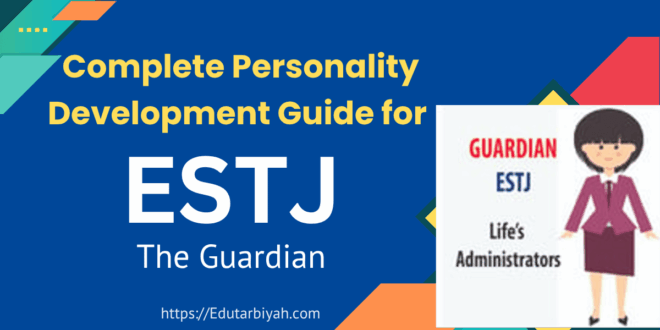
The ESTJ personality type is one of the most responsible, organized, practical, and leadership-oriented personality types in the MBTI framework. Often called “The Guardian,” “The Executive,” “The Supervisor,” or “The Organizer,” ESTJs are known for their strong work ethic, reliability, discipline, and ability to bring order to chaos.
ESTJs naturally take charge of situations. They value responsibility, structure, efficiency, and results. They are often the people who organize teams, lead projects, enforce standards, and ensure that commitments are fulfilled. Their practical mindset and commitment to duty make them valuable leaders in families, schools, organizations, businesses, and communities.
This Personality Development Guide for ESTJ is designed to help teenagers, university students, professionals, parents, teachers, and personal development enthusiasts understand the ESTJ personality type deeply.
Understanding personality type improves self-awareness, emotional intelligence, relationship improvement, career guidance, and personal growth. It helps explain why ESTJs think, communicate, learn, decide, and behave the way they do.
This comprehensive Personality Development Guide for ESTJ will help ESTJs identify their strengths and weaknesses, recognize blind spots, improve relationships, choose suitable careers, and become the healthiest version of themselves.
What Is MBTI?
The Myers-Briggs Type Indicator (MBTI) is one of the world’s most popular personality frameworks. It identifies sixteen personality types based on four preferences:
- Extraversion (E) or Introversion (I)
- Sensing (S) or Intuition (N)
- Thinking (T) or Feeling (F)
- Judging (J) or Perceiving (P)
Each personality type has unique strengths, motivations, communication styles, learning preferences, and growth opportunities.
MBTI helps people improve:
- Self-awareness
- Personal growth
- Emotional intelligence
- Relationship improvement
- Career development
- Leadership effectiveness
What Does ESTJ Mean?
E – Extraversion
ESTJs gain energy from interacting with people, leading teams, participating in activities, and engaging with the external world.
S – Sensing
ESTJs focus on facts, realities, experiences, and practical information. They trust evidence more than theories.
T – Thinking
ESTJs make decisions based on logic, fairness, objectivity, and efficiency rather than emotions.
J – Judging
ESTJs prefer structure, planning, organization, schedules, and clear expectations.
Cognitive Preferences of ESTJ
A deeper Personality Development Guide for ESTJ should include cognitive functions.
Dominant Function: Extraverted Thinking (Te)
This function helps ESTJs:
- Organize people
- Manage resources
- Make decisions efficiently
- Achieve goals
- Create systems
It explains why ESTJs naturally take leadership roles.
Auxiliary Function: Introverted Sensing (Si)
This function helps ESTJs value experience, tradition, reliability, and proven methods.
Tertiary Function: Extraverted Intuition (Ne)
This function helps ESTJs consider possibilities and alternative solutions as they mature.
Inferior Function: Introverted Feeling (Fi)
This is often a growth area.
ESTJs may struggle to understand and express their deeper emotions.
Overview of ESTJ – The Guardian
Nickname
The Guardian, Executive, Supervisor, or Organizer
Core Motivation
To create order, achieve results, fulfill responsibilities, and lead effectively.
Core Fear
Failure, incompetence, disorder, inefficiency, and loss of control.
Core Values
ESTJs often value:
- Responsibility
- Discipline
- Loyalty
- Duty
- Honesty
- Efficiency
- Hard work
- Leadership
- Structure
- Reliability
Life Mission
To build strong systems, lead responsibly, contribute meaningfully, and create stability for others.
Key Characteristics of ESTJ
Thinking Style
ESTJs think practically, logically, and systematically.
They often ask:
- What works?
- What is the most efficient solution?
- How can this be organized?
- What are the facts?
Communication Style
ESTJs are direct, confident, clear, and decisive communicators.
They often value honesty more than diplomacy.
Learning Style
ESTJs learn best through:
- Practical application
- Structured learning
- Clear objectives
- Experience
- Real-world examples
Work Style
ESTJs are productive, organized, dependable, and goal-oriented workers.
Decision-Making Style
ESTJs make decisions based on logic, evidence, responsibility, and effectiveness.
Greatest Strengths of ESTJ
This Personality Development Guide for ESTJ highlights the strengths that make ESTJs exceptional.
1. Leadership
ESTJs naturally organize people and direct efforts toward goals.
Example:
An ESTJ manager can efficiently coordinate a large team and ensure deadlines are met.
2. Responsibility
They take commitments seriously.
3. Reliability
People often trust ESTJs to follow through.
4. Organization
ESTJs excel at creating order and structure.
5. Work Ethic
They are often hardworking and disciplined.
6. Practicality
ESTJs focus on realistic solutions.
7. Decisiveness
They can make decisions quickly when needed.
8. Loyalty
ESTJs are committed to people, organizations, and values they believe in.
9. Persistence
They keep working until objectives are achieved.
10. Accountability
ESTJs take ownership of responsibilities.
Common Weaknesses and Challenges
Every personality type has strengths and weaknesses.
1. Rigidity
ESTJs may resist change.
2. Impatience
They may become frustrated with slower people.
3. Overcontrolling Behavior
They may try to manage everything.
4. Difficulty Expressing Emotions
Feelings may be viewed as secondary to logic.
5. Judgmental Attitude
ESTJs may criticize people who do not meet standards.
6. Resistance to Unconventional Ideas
New approaches may initially seem impractical.
7. Workaholism
ESTJs may prioritize achievement over balance.
8. Insensitivity
Direct communication can unintentionally hurt others.
9. Fear of Failure
They may place excessive pressure on themselves.
10. Difficulty Relaxing
Productivity often feels more comfortable than rest.
Blind Spots of ESTJ
A key goal of this Personality Development Guide for ESTJ is identifying hidden growth areas.
Blind Spot 1: Assuming Efficiency Is Everything
People matter as much as results.
Blind Spot 2: Ignoring Emotional Needs
Relationships require empathy, not just solutions.
Blind Spot 3: Equating Different with Wrong
Alternative methods can sometimes be better.
Blind Spot 4: Micromanaging Others
Trust is essential for leadership.
Blind Spot 5: Neglecting Self-Care
Constant productivity can lead to burnout.
How to Overcome Blind Spots
- Practice active listening.
- Ask for feedback.
- Consider alternative perspectives.
- Develop emotional intelligence.
- Prioritize balance and self-care.
Emotional Growth Areas
Emotional Intelligence Challenges
ESTJs may struggle with:
- Emotional expression
- Vulnerability
- Empathy
- Patience with emotional people
- Understanding personal feelings
Self-Awareness Development
Ask yourself:
- What am I feeling?
- Am I listening or controlling?
- How does this affect others?
- Am I being too critical?
Self-Regulation Strategies
- Journaling
- Reflection
- Mindfulness
- Exercise
- Active listening
- Seeking feedback
Relationship Guide
ESTJ as a Spouse
ESTJs are loyal, dependable, hardworking, and protective partners.
Challenges:
- Controlling tendencies
- Emotional distance
- High expectations
Growth Tips:
- Express appreciation.
- Show emotional warmth.
- Listen without immediately solving problems.
ESTJ as a Parent
ESTJ parents often provide structure, stability, discipline, and responsibility.
Growth Tips:
- Encourage creativity.
- Allow individuality.
- Balance discipline with affection.
ESTJ as a Friend
ESTJs are dependable, loyal, and supportive friends.
ESTJ as a Colleague
ESTJs bring structure, accountability, and leadership.
Growth Tips:
- Be open to new ideas.
- Encourage collaboration.
- Avoid micromanagement.
Career Development Guide
A strong Personality Development Guide for ESTJ should provide career guidance.
Best Careers for ESTJ
ESTJs thrive in careers involving organization, leadership, responsibility, and practical results.
Examples include:
- Business Manager
- Executive
- Entrepreneur
- Military Officer
- Police Officer
- Project Manager
- Accountant
- Financial Manager
- Lawyer
- Judge
- School Administrator
- Government Official
- Operations Manager
- Engineer
- Healthcare Administrator
- Human Resources Manager
Careers That May Feel Draining
ESTJs may struggle in careers involving:
- Excessive ambiguity
- Lack of structure
- Constant unpredictability
- Minimal accountability
Leadership Strengths
ESTJs lead through discipline, organization, accountability, and responsibility.
Workplace Challenges
- Delegation
- Flexibility
- Emotional communication
- Adapting to unconventional approaches
Career Growth Roadmap
- Develop emotional intelligence.
- Improve delegation skills.
- Learn strategic thinking.
- Encourage innovation.
- Build collaborative leadership.
- Maintain work-life balance.
Parenting an ESTJ Child
ESTJ children are often responsible, organized, competitive, and achievement-oriented.
How Parents Should Nurture an ESTJ Child
- Teach leadership responsibly.
- Encourage flexibility.
- Support emotional development.
- Reward effort, not only results.
Common Parenting Mistakes
- Excessive pressure
- Overemphasis on achievement
- Ignoring emotional needs
- Discouraging creativity
Educational Recommendations
ESTJ children learn best through:
- Structure
- Clear expectations
- Practical activities
- Responsibility
- Leadership opportunities
Personal Development Roadmap
Daily Habits
- Exercise regularly.
- Practice gratitude.
- Reflect on emotions.
- Prioritize important tasks.
- Spend quality time with loved ones.
Weekly Habits
- Review goals.
- Seek feedback.
- Learn something new.
- Schedule rest and recreation.
Mindset Shifts
From:
“My way is the best way.”
To:
“There may be other effective approaches.”
From:
“Results matter most.”
To:
“People and results both matter.”
Skills to Learn
- Emotional intelligence
- Active listening
- Conflict resolution
- Delegation
- Coaching
- Strategic thinking
- Creativity
Books to Read
- Emotional Intelligence
- Atomic Habits
- Leaders Eat Last
- The 7 Habits of Highly Effective People
- Mindset
Habits to Avoid
- Micromanaging
- Overworking
- Excessive criticism
- Ignoring emotions
- Resistance to change
Spiritual and Character Development
Humility
Leadership becomes more effective when combined with humility.
Discipline
ESTJs naturally value discipline. Continue refining it wisely.
Patience
Patience strengthens relationships and leadership.
Gratitude
Success becomes meaningful when accompanied by gratitude.
Purpose-Driven Living
Use leadership abilities to serve others and create positive impact.
How ESTJ Can Become Their Best Version
The healthiest ESTJ is disciplined, emotionally intelligent, flexible, responsible, and purpose-driven.
Step 1
Accept your strengths.
Step 2
Develop emotional awareness.
Step 3
Learn flexibility.
Step 4
Improve relationships.
Step 5
Delegate effectively.
Step 6
Maintain balance.
Step 7
Lead with wisdom and compassion.
This is the heart of the Personality Development Guide for ESTJ: transforming responsibility into leadership, discipline into wisdom, and achievement into meaningful contribution.
Famous ESTJ Personalities
Examples often associated with ESTJ characteristics include:
- George Washington
- Margaret Thatcher
- John D. Rockefeller
- Judge Judy
- Lyndon B. Johnson
- Frank Sinatra
Lessons We Can Learn
- Leadership requires responsibility.
- Discipline creates success.
- Organization improves effectiveness.
- Integrity builds trust.
- Service strengthens leadership.
Frequently Asked Questions
1. What is the ESTJ personality type?
ESTJ stands for Extraversion, Sensing, Thinking, and Judging.
2. Why is ESTJ called The Guardian?
Because ESTJs often protect systems, traditions, responsibilities, and standards.
3. What are ESTJ strengths?
Leadership, responsibility, reliability, organization, and accountability.
4. What are ESTJ weaknesses?
Rigidity, impatience, emotional distance, and controlling tendencies.
5. Are ESTJs emotional?
Yes, but they may express emotions less openly than some personality types.
6. What careers suit ESTJs?
Management, business, law, administration, military, finance, and leadership roles.
7. How can ESTJs improve relationships?
By practicing empathy, listening skills, flexibility, and emotional expression.
8. How should parents raise an ESTJ child?
With structure, responsibility, emotional support, and opportunities for leadership.
9. What stresses ESTJs most?
Disorganization, inefficiency, unreliability, and lack of accountability.
10. What is the best personal development path for ESTJ?
Developing emotional intelligence, flexibility, humility, and balanced leadership.
Final Thoughts
The ESTJ personality type brings leadership, responsibility, discipline, structure, and reliability into the world. ESTJs are natural organizers and guardians who create stability, maintain standards, and help others achieve goals.
This Personality Development Guide for ESTJ demonstrates that personal growth is not about changing your personality. It is about developing your strengths while overcoming weaknesses and blind spots.
The healthiest ESTJ is strong yet compassionate, disciplined yet flexible, confident yet humble, and productive yet balanced.
Key Takeaways
- ESTJs are responsible, organized, and leadership-oriented.
- Their strengths include reliability, discipline, and accountability.
- Their weaknesses include rigidity, impatience, and emotional distance.
- Growth comes through emotional intelligence and flexibility.
- ESTJ children thrive with structure and responsibility.
- ESTJs become exceptional leaders when they combine discipline with compassion.
Personal Development Challenge
For the next seven days, ask one person daily:
“What is your perspective on this?”
Listen fully without interrupting or offering a solution immediately.
True personality development begins when leadership is balanced with understanding.