Edutarbiyah English Blog A Trusted Resource for Parenting, Islamic Tarbiyah & Personal Development
Have you ever wondered why some people naturally inspire others, build strong relationships, and dedicate themselves to helping people reach their potential? If so, you may be looking at the personality traits of an ENFJ.
This comprehensive Personality Development Guide for ENFJ will help you understand the unique qualities, strengths, challenges, and growth opportunities associated with this personality type. Whether you are an ENFJ yourself, a parent raising an ENFJ child, a teacher, or someone interested in personality development, this guide will provide valuable insights.
What is MBTI?
The Myers-Briggs Type Indicator (MBTI) is one of the world’s most widely used personality frameworks. Based on the work of Carl Jung, it identifies 16 personality types according to four preference pairs:
- Extraversion (E) vs Introversion (I)
- Intuition (N) vs Sensing (S)
- Feeling (F) vs Thinking (T)
- Judging (J) vs Perceiving (P)
Understanding your personality type improves self-awareness, emotional intelligence, career guidance, communication, and relationship improvement.
Why Understanding Personality Type Matters
Knowing your personality type helps you:
- Understand your natural strengths and weaknesses
- Improve personal growth
- Build healthier relationships
- Choose suitable careers
- Manage stress effectively
- Increase self-confidence
- Develop emotional intelligence
Brief Introduction to ENFJ
ENFJ stands for:
- Extraverted
- Intuitive
- Feeling
- Judging
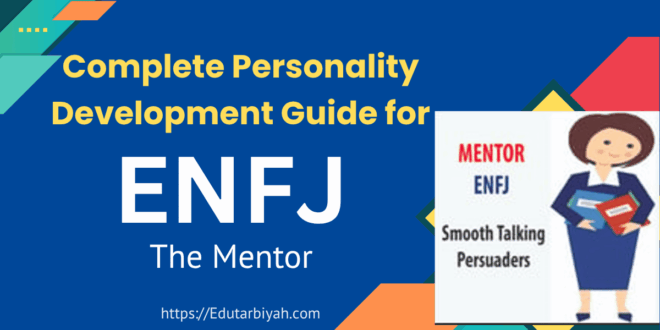
Often called “The Mentor”, ENFJs are warm, charismatic, empathetic, and people-oriented individuals who naturally guide and inspire others.
The ENFJ Personality Type is known for leadership, compassion, communication skills, and a strong desire to help people grow.
What Does ENFJ Mean?
Extraverted (E)
ENFJs gain energy from interacting with people.
Example:
After attending a workshop, an ENFJ often feels energized rather than exhausted.
Intuitive (N)
They focus on possibilities, future opportunities, and big-picture thinking.
Example:
Instead of concentrating only on present circumstances, they imagine what people can become.
Feeling (F)
ENFJs make decisions primarily based on values and human impact.
Example:
They often ask, “How will this affect others?”
Judging (J)
They prefer structure, planning, organization, and clear goals.
Example:
An ENFJ usually likes schedules, plans, and defined expectations.
Cognitive Preferences Behind ENFJ
Dominant Function: Extraverted Feeling (Fe)
- Focuses on harmony
- Understands emotions
- Supports others
- Creates positive social environments
Auxiliary Function: Introverted Intuition (Ni)
- Future-focused
- Strategic thinker
- Sees patterns and possibilities
Tertiary Function: Extraverted Sensing (Se)
- Appreciates experiences
- Enjoys engaging with the environment
Inferior Function: Introverted Thinking (Ti)
- Supports logical analysis
- Often less developed in younger ENFJs
Overview of ENFJ
Nickname
The Mentor
Core Motivation
To help people become their best selves.
Core Fear
Being rejected, unappreciated, or unable to help others.
Core Values
- Compassion
- Integrity
- Growth
- Relationships
- Service
Life Mission
To inspire, guide, and positively impact people’s lives.
Key Characteristics of ENFJ
Thinking Style
- Big-picture thinker
- Future-focused
- People-centered
Communication Style
- Warm
- Encouraging
- Persuasive
- Motivational
Learning Style
ENFJs learn best through:
- Discussion
- Collaboration
- Real-life application
- Mentorship
Work Style
- Organized
- Responsible
- Team-oriented
- Goal-focused
Decision-Making Style
They balance:
- Values
- Human impact
- Long-term consequences
Greatest Strengths of ENFJ
The Personality Development Guide for ENFJ would be incomplete without understanding these powerful strengths.
1. Natural Leadership
ENFJs naturally inspire people.
Example:
Teachers, coaches, and community leaders often display ENFJ qualities.
2. Empathy
They understand emotions exceptionally well.
3. Communication Skills
ENFJs communicate ideas clearly and persuasively.
4. Encouraging Others
They help people discover hidden potential.
5. Strong Relationship Building
They form meaningful connections.
6. Visionary Thinking
They see future possibilities.
7. High Emotional Intelligence
They recognize emotions effectively.
8. Team Development
They bring out the best in groups.
9. Loyalty
ENFJs are deeply committed to loved ones.
10. Purpose-Driven Living
They seek meaningful contributions rather than personal gain alone.
Common Weaknesses and Challenges
Every personality type has weaknesses.
1. People-Pleasing
They often prioritize others over themselves.
2. Difficulty Saying No
Fear of disappointing others.
3. Over-Involvement
Taking responsibility for others’ problems.
4. Emotional Exhaustion
Constant giving can lead to burnout.
5. Sensitivity to Criticism
They may take feedback personally.
6. Conflict Avoidance
They dislike confrontation.
7. Unrealistic Expectations
Expecting everyone to share their values.
8. Self-Neglect
Ignoring personal needs.
9. Dependence on Appreciation
Seeking external validation.
10. Overcommitment
Taking on too many responsibilities.
Blind Spots of ENFJ
A valuable part of any Personality Development Guide for ENFJ is identifying blind spots.
Hidden Behaviors
- Trying to “fix” people
- Becoming overly responsible
- Controlling through good intentions
- Ignoring personal needs
Common Mistakes
- Giving unsolicited advice
- Avoiding difficult conversations
- Sacrificing boundaries
- Taking others’ emotions personally
How to Overcome Blind Spots
- Practice self-reflection
- Ask for honest feedback
- Develop objective thinking
- Learn healthy boundaries
Emotional Growth Areas
Emotional Intelligence Challenges
ENFJs often absorb emotions from others.
Growth Tip
Separate your feelings from others’ feelings.
Self-Awareness Development
Ask daily:
- What am I feeling?
- Why am I feeling this?
- What do I need right now?
Self-Regulation Strategies
- Journaling
- Mindfulness
- Exercise
- Reflection
- Healthy boundaries
Relationship Guide
ENFJ as a Spouse
Strengths:
- Caring
- Supportive
- Loyal
- Romantic
Challenges:
- Overgiving
- High expectations
Improvement Tip
Communicate needs openly.
ENFJ as a Parent
Strengths:
- Nurturing
- Encouraging
- Protective
Challenges:
- Overprotectiveness
- Excessive involvement
ENFJ as a Friend
- Loyal
- Helpful
- Dependable
They often become the emotional support system of the group.
ENFJ as a Colleague
Strengths:
- Team builder
- Motivator
- Collaborator
Challenges:
- Avoiding necessary conflict
- Taking workplace issues personally
Communication Improvement Tips
- Listen before advising
- Avoid assumptions
- Ask clarifying questions
- Set healthy boundaries
Career Development Guide
Career guidance is a crucial part of this Personality Development Guide for ENFJ.
Best Careers for ENFJ
- Teacher
- Counselor
- Psychologist
- Coach
- HR Manager
- Trainer
- Public Speaker
- Social Worker
- Consultant
- Community Leader
- Religious Leader
- Marketing Manager
Careers to Avoid
Some ENFJs may struggle in careers involving:
- Extreme isolation
- Repetitive tasks
- Minimal human interaction
Examples:
- Data entry
- Routine accounting
- Isolated technical work
Leadership Strengths
ENFJs excel at:
- Motivating teams
- Building culture
- Conflict resolution
- Vision sharing
Workplace Challenges
- Burnout
- Overcommitment
- Emotional decision-making
Career Growth Roadmap
Stage 1: Build Expertise
Develop technical skills.
Stage 2: Build Influence
Improve communication.
Stage 3: Lead Others
Mentor and coach.
Stage 4: Create Impact
Lead meaningful initiatives.
Parenting an ENFJ Child
How Parents Should Nurture Them
- Encourage empathy
- Support leadership opportunities
- Praise effort, not only results
- Teach healthy boundaries
Common Parenting Mistakes
- Overcriticizing emotions
- Ignoring their need for connection
- Pressuring perfection
Educational Recommendations
ENFJs thrive in:
- Group projects
- Leadership programs
- Service activities
- Discussion-based learning
Personal Development Roadmap
This section forms the heart of the Personality Development Guide for ENFJ.
Daily Habits
- Journaling
- Reading
- Reflection
- Exercise
- Gratitude practice
Weekly Habits
- Goal review
- Family connection
- Skill development
- Community service
Mindset Shifts
Replace:
“I must help everyone.”
With:
“I can help others while respecting my limits.”
Skills to Learn
- Assertiveness
- Negotiation
- Financial literacy
- Strategic thinking
- Emotional regulation
Books to Read
Personal Growth
- Atomic Habits
- Mindset
- Emotional Intelligence
Leadership
- Leaders Eat Last
- The 7 Habits of Highly Effective People
Self-Awareness
- The Road Less Traveled
- Daring Greatly
Habits to Avoid
- People pleasing
- Overworking
- Comparing yourself
- Ignoring self-care
- Seeking constant approval
Spiritual and Character Development
The healthiest ENFJs combine influence with character.
Humility
Recognize that growth is a lifelong process.
Discipline
Good intentions need consistent action.
Patience
Not everyone grows at the same pace.
Gratitude
Focus on blessings rather than limitations.
Purpose-Driven Living
Align goals with values and service.
How ENFJ Can Become Their Best Version
Step 1: Increase Self-Awareness
Understand your patterns and motivations.
Step 2: Strengthen Boundaries
Protect your time and energy.
Step 3: Develop Logical Thinking
Balance emotion with objective analysis.
Step 4: Prioritize Self-Care
You cannot pour from an empty cup.
Step 5: Lead with Purpose
Focus on meaningful impact.
Step 6: Continue Learning
Invest in lifelong personal growth.
Step 7: Build Emotional Resilience
Accept criticism as feedback.
Famous ENFJ Personalities
Historical Figures
- Mahatma Gandhi
- Martin Luther King Jr.
Modern Personalities
- Oprah Winfrey
- Barack Obama
(Personality typing of public figures is based on common MBTI assessments and remains theoretical.)
Lessons We Can Learn
From these individuals we learn:
- Inspire rather than control
- Lead through service
- Communicate vision clearly
- Stay committed to meaningful causes
Frequently Asked Questions (FAQ)
1. What is the ENFJ Personality Type?
The ENFJ Personality Type is known as “The Mentor” and focuses on helping people grow.
2. Are ENFJs good leaders?
Yes. Leadership is one of their strongest qualities.
3. Are ENFJs emotional?
They are emotionally aware but can also be strategic.
4. What careers suit ENFJs best?
Teaching, coaching, counseling, leadership, and people-centered professions.
5. What is the biggest weakness of ENFJs?
People pleasing and difficulty setting boundaries.
6. Can ENFJs be introverted?
They may enjoy solitude occasionally but generally gain energy from people.
7. Are ENFJs good parents?
Yes, they are nurturing and supportive parents.
8. What stresses ENFJs most?
Conflict, criticism, and feeling unappreciated.
9. How can ENFJs improve emotional intelligence?
Through self-reflection, mindfulness, and healthy boundaries.
10. What is the growth path for ENFJs?
Balance compassion with logic, service with self-care, and leadership with humility.
Final Thoughts
The Personality Development Guide for ENFJ reveals a personality type blessed with empathy, vision, leadership, and a deep desire to help others thrive. The greatest challenge for ENFJs is not learning how to care for others—it is learning how to care for themselves while serving others.
Your strengths can transform families, organizations, communities, and even nations. Yet your growth depends on developing balance: balancing compassion with boundaries, inspiration with discipline, and service with self-respect.
Key Takeaways
- Understand your natural strengths and weaknesses.
- Develop strong self-awareness.
- Build emotional intelligence.
- Set healthy boundaries.
- Pursue meaningful personal growth.
- Lead with integrity and purpose.
Personal Development Challenge
For the next 30 days:
- Journal daily.
- Set one healthy boundary each week.
- Read 10 pages of a personal growth book every day.
- Practice gratitude nightly.
- Invest time in your own growth before solving others’ problems.
When ENFJs learn to care for themselves as passionately as they care for others, they become extraordinary leaders, mentors, parents, spouses, and world changers.
That is the journey toward becoming the healthiest and most fulfilled version of the ENFJ Personality Type.