Edutarbiyah English Blog A Trusted Resource for Parenting, Islamic Tarbiyah & Personal Development
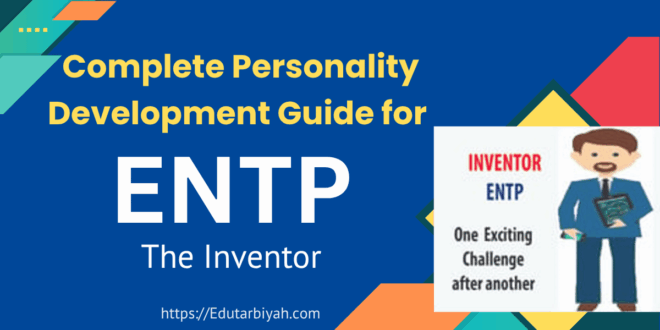
The ENTP personality type is one of the most curious, innovative, energetic, and intellectually adventurous types in the MBTI framework. Often called “The Inventor,” “The Debater,” or “The Visionary,” ENTPs are known for their quick thinking, creative problem-solving, love of possibilities, and ability to challenge old ideas.
ENTPs naturally enjoy asking questions, exploring alternatives, debating concepts, and discovering better ways to do things. They are often full of ideas, possibilities, and mental energy. Where others see a fixed system, ENTPs see a chance for improvement. Where others accept tradition, ENTPs ask, “Why?” and “What if?”
This Personality Development Guide for ENTP is designed for teenagers, university students, professionals, parents, teachers, mentors, and personal development enthusiasts who want to understand the ENTP personality type deeply.
Understanding your personality type improves self-awareness, emotional intelligence, relationship improvement, career guidance, and personal growth. It helps explain why ENTPs think, communicate, learn, decide, and behave differently from many other personality types.
This comprehensive Personality Development Guide for ENTP will help ENTPs discover their strengths and weaknesses, identify blind spots, improve relationships, make better career decisions, and become the healthiest version of themselves.
What Is MBTI?
The Myers-Briggs Type Indicator, commonly known as MBTI, is a personality framework that identifies sixteen personality types based on four key preferences:
- Extraversion or Introversion
- Sensing or Intuition
- Thinking or Feeling
- Judging or Perceiving
MBTI does not define a person completely. It is not a box or a label. Instead, it is a tool for self-awareness and personal growth. It helps people understand their natural tendencies, communication style, learning preferences, strengths and weaknesses, and areas for development.
For ENTPs, MBTI can be especially helpful because it explains their need for intellectual freedom, creativity, debate, exploration, and innovation.
Why Understanding Personality Type Matters
Many people try to improve themselves without understanding their natural personality design. As a result, they either copy others blindly or become frustrated with themselves.
When ENTPs understand their personality type, they can answer important questions:
- Why do I enjoy debating ideas?
- Why do I get excited by new possibilities?
- Why do I lose interest in routine?
- Why do I start many projects but struggle to finish them?
- Why do I resist unnecessary rules?
- How can I turn my ideas into real success?
This is why a Personality Development Guide for ENTP is not only about describing personality traits. It is a practical roadmap for transforming creativity into contribution, intelligence into wisdom, and ideas into action.
What Does ENTP Mean?
ENTP stands for Extraversion, Intuition, Thinking, and Perceiving.
E – Extraversion
ENTPs gain energy from interacting with people, exchanging ideas, debating concepts, and exploring the external world. They often enjoy conversations, brainstorming, networking, and intellectual discussion.
Unlike some extroverts who only seek social fun, ENTPs often seek mental stimulation through people.
N – Intuition
ENTPs focus on possibilities, patterns, ideas, innovation, and future potential. They naturally look beyond what exists and imagine what could be improved, changed, or created.
T – Thinking
ENTPs make decisions through logic, analysis, objectivity, and rational evaluation. They value truth, clarity, efficiency, and intellectual honesty.
P – Perceiving
ENTPs prefer flexibility, openness, spontaneity, and keeping options available. They often dislike rigid routines, fixed structures, and being forced to decide too early.
Cognitive Preferences of ENTP
A deeper Personality Development Guide for ENTP must include cognitive functions because they explain how ENTPs process the world.
Dominant Function: Extraverted Intuition
Extraverted Intuition is the core of the ENTP personality. It helps ENTPs generate ideas, see possibilities, connect concepts, and imagine alternatives.
This function makes ENTPs curious, inventive, and open to change.
Auxiliary Function: Introverted Thinking
Introverted Thinking helps ENTPs analyze ideas, test logic, question assumptions, and build internal frameworks.
This function gives ENTPs their love of debate and intellectual precision.
Tertiary Function: Extraverted Feeling
Extraverted Feeling helps ENTPs understand social energy, influence people, and read group dynamics. Mature ENTPs often become charismatic communicators.
Inferior Function: Introverted Sensing
This is often the ENTP’s growth area. ENTPs may struggle with routines, details, consistency, memory of obligations, and respect for proven methods.
Overview of ENTP – The Inventor
Nickname
The Inventor, The Debater, or The Visionary.
Core Motivation
To explore possibilities, challenge limitations, solve problems, create new ideas, and understand how systems can be improved.
Core Fear
Being trapped, controlled, bored, intellectually restricted, or forced into meaningless routine.
Core Values
ENTPs often value:
- Freedom
- Innovation
- Knowledge
- Creativity
- Debate
- Independence
- Truth
- Possibility
- Growth
- Intellectual honesty
Life Mission
The life mission of an ENTP is to challenge outdated thinking, generate new ideas, solve complex problems, and inspire innovation in people, organizations, and society.
Key Characteristics of ENTP
Thinking Style
ENTPs think creatively, quickly, and conceptually. They enjoy exploring multiple sides of an issue and testing ideas through discussion.
They often ask:
- What if there is another way?
- Why do people accept this system?
- What assumptions are hidden here?
- How can this be improved?
- What possibility has not been explored?
Communication Style
ENTPs are often energetic, witty, expressive, and debate-oriented communicators. They may enjoy challenging ideas, asking difficult questions, and playing intellectual “devil’s advocate.”
Healthy ENTPs use debate to discover truth. Unhealthy ENTPs may debate only to win.
Learning Style
ENTPs learn best through:
- Debate
- Exploration
- Experiments
- Discussion
- Innovation
- Conceptual thinking
- Real-world problem-solving
They usually dislike memorization without understanding.
Work Style
ENTPs thrive in dynamic, creative, flexible, and intellectually stimulating environments. They dislike micromanagement, bureaucracy, and repetitive work.
Decision-Making Style
ENTPs make decisions through logic, possibilities, analysis, and practical opportunity. However, they may delay decisions because they keep seeing new options.
Greatest Strengths of ENTP
This Personality Development Guide for ENTP helps ENTPs identify and use their natural strengths wisely.
1. Innovation
ENTPs are natural innovators. They can see new possibilities where others see fixed limitations.
Example: An ENTP entrepreneur may turn an ordinary problem into a business idea by asking, “Why has no one solved this differently?”
2. Quick Thinking
ENTPs can respond rapidly in discussions, negotiations, and problem-solving situations.
3. Creativity
They generate fresh ideas, new approaches, and unusual solutions.
4. Confidence
Many ENTPs are comfortable expressing bold opinions.
5. Debate Skills
They enjoy testing ideas and challenging assumptions.
6. Adaptability
ENTPs adjust quickly when situations change.
7. Strategic Problem-Solving
They can analyze systems and identify better methods.
8. Curiosity
ENTPs often have a lifelong hunger for knowledge.
9. Charisma
Many ENTPs are socially engaging, humorous, and persuasive.
10. Entrepreneurial Energy
They often enjoy risk, opportunity, innovation, and business-building.
Common Weaknesses and Challenges
Every personality type has strengths and weaknesses. ENTPs grow when they understand both.
1. Lack of Follow-Through
ENTPs may start many projects but struggle to complete them.
2. Argumentative Behavior
They may debate too much, even when others need support rather than analysis.
3. Dislike of Routine
Daily structure, repetition, and details may feel boring.
4. Impulsiveness
ENTPs may chase exciting ideas without evaluating practical consequences.
5. Difficulty with Commitment
They may hesitate to commit because they see too many possibilities.
6. Insensitivity
Their direct or playful debating style may hurt sensitive people.
7. Overconfidence
ENTPs may underestimate the difficulty of execution.
8. Restlessness
They may quickly become bored after the excitement of a new idea fades.
9. Poor Organization
Details, schedules, and deadlines may be neglected.
10. Resistance to Authority
ENTPs often resist rules that seem irrational or unnecessary.
Blind Spots of ENTP
A central part of this Personality Development Guide for ENTP is helping ENTPs recognize hidden patterns that may limit growth.
Blind Spot 1: Thinking Ideas Are Enough
Ideas are powerful, but implementation creates impact. A brilliant idea without action remains only a possibility.
Blind Spot 2: Debating When Empathy Is Needed
Sometimes people do not need arguments. They need listening, comfort, and emotional understanding.
Blind Spot 3: Avoiding Discipline
Freedom is important, but discipline protects freedom and turns potential into achievement.
Blind Spot 4: Ignoring Details
Small details can determine whether a project succeeds or fails.
Blind Spot 5: Mistaking Novelty for Growth
New ideas are exciting, but real growth often comes through consistency.
How ENTPs Can Overcome Blind Spots
- Finish one project before starting five new ones.
- Ask people if they want advice or emotional support.
- Use checklists and deadlines.
- Build accountability systems.
- Practice patience with routine.
- Learn to value execution as much as innovation.
Emotional Growth Areas
Emotional intelligence is a major growth area for ENTPs.
Emotional Intelligence Challenges
ENTPs may struggle with:
- Listening without debating
- Understanding sensitive personalities
- Expressing vulnerability
- Slowing down emotionally
- Taking criticism seriously
- Respecting emotional boundaries
Self-Awareness Development
ENTPs should regularly ask:
- Am I debating to learn or to win?
- Am I avoiding responsibility through new ideas?
- What emotion am I ignoring?
- How did my words affect the other person?
- What practical step must I take now?
Self-Regulation Strategies
- Pause before responding.
- Practice active listening.
- Write down commitments.
- Reflect daily for ten minutes.
- Avoid making promises during excitement.
- Exercise to manage mental restlessness.
- Ask trusted people for honest feedback.
A mature ENTP is not less creative. A mature ENTP is more emotionally intelligent, disciplined, and constructive.
Relationship Guide for ENTP
ENTP as a Spouse
ENTPs can be exciting, humorous, intellectually stimulating, and adventurous partners. They bring fresh ideas, energy, and creativity into marriage.
However, they may struggle with routine responsibilities, emotional sensitivity, and consistency.
Growth tips:
- Listen before debating.
- Do not turn every disagreement into an intellectual challenge.
- Show appreciation regularly.
- Keep promises.
- Give emotional reassurance.
- Respect your spouse’s need for stability.
ENTP as a Parent
ENTP parents often encourage curiosity, independence, questioning, and creativity. They may raise children who think critically and explore ideas freely.
However, ENTP parents should be careful not to be inconsistent or overly argumentative.
Growth tips:
- Create basic routines.
- Respect children’s emotions.
- Avoid teasing sensitive children.
- Balance freedom with responsibility.
- Teach discipline through example.
ENTP as a Friend
ENTPs are often entertaining, energetic, witty, and interesting friends. They enjoy deep conversations, jokes, debates, and adventures.
Growth tips:
- Be present during difficult times.
- Avoid correcting every statement.
- Show loyalty through action.
- Respect emotional boundaries.
ENTP as a Colleague
ENTPs are valuable colleagues in innovation, brainstorming, strategy, sales, marketing, entrepreneurship, and problem-solving.
Growth tips:
- Respect deadlines.
- Follow through on commitments.
- Do not dismiss practical details.
- Appreciate team members who provide structure.
Communication Improvement Tips
- Ask before debating.
- Use humor wisely.
- Validate emotions.
- Avoid interrupting.
- Explain your ideas simply.
- Appreciate others’ contributions.
- Learn when silence is better than argument.
Career Development Guide for ENTP
A strong Personality Development Guide for ENTP must include career guidance because ENTPs need intellectual freedom, challenge, and innovation.
Best Careers for ENTP
ENTPs often succeed in careers that involve ideas, people, strategy, innovation, persuasion, and problem-solving.
Suitable careers include:
- Entrepreneur
- Business consultant
- Marketing strategist
- Sales leader
- Lawyer
- Public speaker
- Trainer
- Product manager
- Startup founder
- Creative director
- Journalist
- Political strategist
- Software innovator
- Inventor
- Researcher
- Advertising professional
- Negotiator
- Management consultant
- Content creator
- Leadership coach
Careers That May Feel Draining
ENTPs may feel drained in careers that involve rigid routines, strict hierarchy, repetitive tasks, excessive paperwork, or no room for innovation.
Examples may include:
- Routine clerical work
- Highly repetitive administration
- Micromanaged office roles
- Jobs with no creative freedom
- Environments where questioning is discouraged
- Roles requiring constant attention to small details
Leadership Strengths
ENTP leaders are innovative, persuasive, energetic, and future-oriented. They can inspire teams with ideas and challenge outdated systems.
Workplace Challenges
ENTPs may struggle with:
- Finishing details
- Consistency
- Long-term routine
- Administrative work
- Patience
- Respecting slower decision-makers
- Avoiding unnecessary conflict
Career Growth Roadmap
- Choose work that rewards innovation.
- Build deep expertise.
- Develop execution systems.
- Improve emotional intelligence.
- Learn project management.
- Partner with detail-oriented people.
- Build accountability.
- Convert ideas into measurable results.
Parenting an ENTP Child
ENTP children are often curious, energetic, talkative, questioning, and creative. They may challenge rules, ask many “why” questions, and enjoy debating adults.
How Parents Should Nurture an ENTP Child
- Encourage questions.
- Give logical explanations.
- Provide creative challenges.
- Allow healthy debate.
- Teach respect with freedom.
- Give opportunities to explore ideas.
- Help them finish what they start.
Common Parenting Mistakes
- Punishing curiosity.
- Demanding blind obedience.
- Calling them disrespectful for asking questions.
- Giving too many rigid rules.
- Ignoring their need for mental stimulation.
- Failing to teach discipline and follow-through.
Educational Recommendations
ENTP children learn best through:
- Debate
- Experiments
- Projects
- Problem-solving
- Creative assignments
- Entrepreneurship activities
- Science, technology, leadership, and innovation tasks
Teachers should challenge ENTP students intellectually while teaching them patience, respect, organization, and project completion.
Personal Development Roadmap for ENTP
This Personality Development Guide for ENTP becomes useful when it gives practical development steps.
Daily Habits
- Write down your top three priorities.
- Complete one important task before exploring new ideas.
- Exercise to manage energy.
- Practice ten minutes of reflection.
- Listen without interrupting once daily.
- Review commitments.
- Organize one small area.
Weekly Habits
- Finish one unfinished task.
- Review long-term goals.
- Discuss progress with an accountability partner.
- Learn one new skill.
- Spend quality time with family or friends.
- Reflect on emotional reactions.
- Plan the next week lightly.
Mindset Shifts
From: “Ideas are everything.”
To: “Execution gives ideas value.”
From: “Debate sharpens truth.”
To: “Empathy strengthens relationships.”
From: “Routine limits freedom.”
To: “Useful structure protects freedom.”
From: “I can do it later.”
To: “Small action today creates progress.”
Skills ENTPs Should Learn
- Emotional intelligence
- Project management
- Time management
- Active listening
- Strategic planning
- Financial discipline
- Conflict resolution
- Follow-through
- Leadership
- Relationship communication
Books to Read
ENTPs may benefit from books about:
- Innovation
- Entrepreneurship
- Emotional intelligence
- Habits
- Leadership
- Communication
- Strategic thinking
- Productivity
- Character development
- Personal growth
Habits to Avoid
- Starting too many projects
- Endless debating
- Ignoring deadlines
- Overpromising
- Rejecting all routine
- Interrupting others
- Neglecting details
- Chasing novelty
- Avoiding responsibility
- Dismissing emotions
Spiritual and Character Development
Personality development is incomplete without character development.
Humility
ENTPs are quick thinkers, but intelligence should be balanced with humility. Not every discussion needs to be won.
Discipline
Creative energy becomes powerful when supported by discipline. Discipline turns ideas into results.
Patience
Not everyone thinks or responds as quickly as an ENTP. Patience improves relationships, teaching, leadership, and parenting.
Gratitude
ENTPs often focus on future possibilities. Gratitude helps them appreciate present blessings and current progress.
Purpose-Driven Living
ENTPs become their best when their creativity serves a meaningful purpose beyond personal excitement.
How ENTP Can Become Their Best Version
The healthiest ENTP is creative but disciplined, confident but humble, logical but emotionally aware, adventurous but responsible.
Step-by-Step Growth Plan
Step 1: Accept Your Inventive Nature
You do not need to suppress your curiosity or ideas. Your creativity is a gift.
Step 2: Develop Follow-Through
Choose fewer projects and complete them.
Step 3: Build Emotional Intelligence
Learn to listen, validate, and understand before debating.
Step 4: Respect Structure
Use simple systems to support your goals.
Step 5: Improve Relationships
Show care through consistency, presence, and emotional awareness.
Step 6: Think Long-Term
Not every exciting opportunity is worth pursuing.
Step 7: Turn Ideas into Contribution
Use your creativity to solve real problems and benefit others.
This is the heart of the Personality Development Guide for ENTP: transforming ideas into impact, debate into wisdom, and curiosity into meaningful contribution.
Famous ENTP Personalities
Public personality typing is not always certain, but the following personalities are often associated with ENTP traits:
- Thomas Edison
- Benjamin Franklin
- Leonardo da Vinci
- Mark Twain
- Steve Wozniak
- Richard Feynman
- Barack Obama
- Socrates
Lessons We Can Learn from ENTP Personalities
- Curiosity can transform society.
- Innovation requires experimentation.
- Intelligence needs discipline.
- Ideas become powerful through action.
- Communication can inspire change.
Frequently Asked Questions
1. What is the ENTP personality type?
ENTP is one of the 16 MBTI personality types. It stands for Extraversion, Intuition, Thinking, and Perceiving. ENTPs are creative, curious, logical, and idea-driven.
2. Why is ENTP called The Inventor?
ENTPs are called The Inventor because they naturally generate new ideas, challenge old systems, and explore better possibilities.
3. What are the main strengths of ENTP?
ENTP strengths include innovation, quick thinking, creativity, adaptability, debate skills, charisma, and problem-solving.
4. What are the weaknesses of ENTP?
Common ENTP weaknesses include poor follow-through, argumentativeness, disorganization, impulsiveness, and dislike of routine.
5. Are ENTPs emotional?
Yes, ENTPs have emotions, but they may process them through thinking and may struggle to express vulnerability.
6. What careers are best for ENTP?
ENTPs often succeed in entrepreneurship, consulting, law, marketing, sales, public speaking, product development, media, and innovation-based careers.
7. How can ENTPs improve relationships?
ENTPs can improve relationships by listening more, debating less, keeping promises, validating emotions, and becoming more consistent.
8. How should parents raise an ENTP child?
Parents should encourage curiosity, provide logical explanations, allow healthy debate, teach respect, and help the child develop discipline.
9. What stresses ENTPs most?
ENTPs are often stressed by boredom, micromanagement, rigid routine, meaningless rules, and environments that discourage questioning.
10. What is the best personal development path for ENTP?
The best path includes emotional intelligence, discipline, follow-through, communication skills, long-term thinking, and turning ideas into action.
Final Thoughts
The ENTP personality type is one of the most creative, curious, energetic, and innovative personality types. ENTPs are natural inventors, debaters, entrepreneurs, and problem-solvers. They challenge assumptions, explore possibilities, and help others see new ways forward.
However, true development for ENTPs is not only about having more ideas. It is about completing meaningful ideas. It is about balancing freedom with discipline, debate with empathy, intelligence with humility, and innovation with responsibility.
This Personality Development Guide for ENTP shows that ENTPs do not need to change their core personality. They need to refine it. Their curiosity should become wisdom. Their debate should become constructive dialogue. Their creativity should become contribution. Their freedom should become responsible leadership.
Key Takeaways
- ENTPs are curious, creative, logical, and innovative.
- Their greatest strengths are ideas, debate, adaptability, and problem-solving.
- Their main challenges are poor follow-through, argumentativeness, disorganization, and impulsiveness.
- ENTPs grow through discipline, emotional intelligence, consistency, and humility.
- ENTP children need intellectual challenge, logical explanations, freedom, and guidance.
- ENTPs become powerful leaders when they combine innovation with execution.
- The healthiest ENTP is creative, emotionally intelligent, disciplined, humble, and purpose-driven.
Personal Development Challenge for ENTPs
For the next seven days, choose one unfinished idea and complete one practical step toward it daily.
Do not start a new project until you have made visible progress on the current one.
True personality development begins when ideas become disciplined action.