Edutarbiyah English Blog A Trusted Resource for Parenting, Islamic Tarbiyah & Personal Development
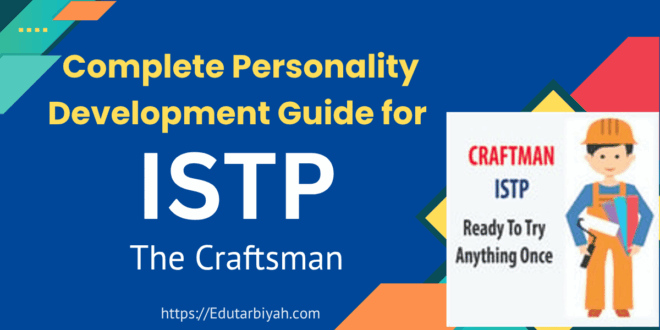
The ISTP personality type is practical, independent, logical, observant, and action-oriented. Often called “The Craftsman” or “The Virtuoso,” ISTPs are naturally skilled at understanding how things work. They enjoy solving real problems, using their hands, analyzing systems, and staying calm under pressure.
This Personality Development Guide for ISTP is written for teenagers, university students, professionals, parents, teachers, mentors, and self-development lovers who want to understand the ISTP personality type deeply.
MBTI, or the Myers-Briggs Type Indicator, is a personality framework that helps people understand how they gain energy, gather information, make decisions, and organize life. Understanding your MBTI personality type improves self-awareness, emotional intelligence, relationship improvement, career guidance, and personal growth.
ISTPs are not usually loud, emotional, or highly expressive. They often prefer action over words, freedom over control, and practical solutions over long discussions. They may seem quiet, mysterious, calm, or detached, but inside they are highly observant, analytical, and capable.
This Personality Development Guide for ISTP will help ISTPs understand their strengths and weaknesses, recognize blind spots, improve relationships, choose better careers, and become the healthiest version of themselves.
What Does ISTP Mean?
ISTP stands for Introversion, Sensing, Thinking, and Perceiving.
I – Introversion
ISTPs gain energy from solitude, independence, and private reflection. They may enjoy people, but they do not usually need constant social interaction. Too much noise, emotional pressure, or unnecessary conversation can drain them.
S – Sensing
ISTPs focus on facts, reality, tools, details, and what can be experienced directly. They usually prefer practical knowledge over abstract theory.
They learn best by doing.
T – Thinking
ISTPs make decisions through logic, analysis, fairness, and objective reasoning. They often ask: “Does this make sense?” rather than “How does everyone feel about it?”
P – Perceiving
ISTPs prefer flexibility, freedom, and spontaneity. They dislike being overly controlled or forced into strict routines. They enjoy keeping options open and responding to life as it happens.
Cognitive Preferences of ISTP
A deeper ISTP personality development guide must explain cognitive functions.
Dominant Function: Introverted Thinking
Introverted Thinking helps ISTPs analyze, understand, and solve problems logically. They want to know how things work from the inside.
Auxiliary Function: Extraverted Sensing
Extraverted Sensing makes ISTPs practical, alert, hands-on, and responsive to the present moment. They are often good with tools, machines, sports, crafts, physical skills, or real-time problem-solving.
Tertiary Function: Introverted Intuition
This function helps ISTPs notice patterns and future possibilities, though they may not rely on it as strongly as intuitive types.
Inferior Function: Extraverted Feeling
This is often the ISTP’s growth area. ISTPs may struggle with emotional expression, social expectations, and understanding the emotional needs of others.
Overview of ISTP – The Craftsman
Nickname
The Craftsman or The Virtuoso.
Core Motivation
To understand, master, fix, explore, and experience the world freely.
Core Fear
Being controlled, trapped, emotionally pressured, incompetent, or forced into meaningless rules.
Core Values
ISTPs usually value:
- Freedom
- Independence
- Practical skill
- Logic
- Competence
- Efficiency
- Adventure
- Privacy
- Problem-solving
- Real-world mastery
Life Mission
The life mission of an ISTP is to master practical skills, solve real problems, live with freedom, and respond wisely to life’s challenges.
Key Characteristics of ISTP
Thinking Style
ISTPs think logically, practically, and independently. They enjoy analyzing systems, tools, problems, and real situations.
Communication Style
ISTPs usually communicate in a direct, brief, and practical way. They do not like unnecessary emotional drama or long explanations.
Learning Style
ISTPs learn best through hands-on experience, experimentation, observation, and practice.
Work Style
ISTPs prefer flexible, practical, and skill-based work. They often dislike micromanagement, rigid systems, and repetitive paperwork.
Decision-Making Style
ISTPs make decisions based on logic, facts, direct experience, and immediate practicality.
Greatest Strengths of ISTP
This Personality Development Guide for ISTP helps ISTPs recognize and use their natural strengths wisely.
1. Practical Problem-Solving
ISTPs are excellent at solving real-life problems.
Example: When something breaks, an ISTP often wants to open it, inspect it, and fix it rather than discuss it for hours.
2. Calm Under Pressure
ISTPs often stay calm in emergencies. They focus on what needs to be done.
3. Independence
They can work alone and make decisions without needing constant approval.
4. Observational Skill
ISTPs notice practical details that others miss.
5. Technical Ability
Many ISTPs are naturally good with tools, machines, technology, sports, crafts, or physical systems.
6. Adaptability
They can respond quickly to changing situations.
7. Efficiency
ISTPs dislike wasting time and usually prefer simple, effective solutions.
8. Courage
They are often willing to take action when others hesitate.
9. Realistic Thinking
ISTPs do not usually get lost in unrealistic fantasies. They focus on what works.
10. Resourcefulness
They can use available resources creatively to solve problems.
Common Weaknesses and Challenges
Every personality type has strengths and weaknesses. ISTPs grow when they understand both.
1. Emotional Detachment
ISTPs may struggle to express feelings or understand emotional expectations.
2. Difficulty with Commitment
They may avoid long-term commitments if they feel trapped.
3. Impulsiveness
Their desire for action can sometimes lead to risky decisions.
4. Dislike of Rules
ISTPs may resist rules they consider unnecessary.
5. Avoidance of Deep Conversations
They may avoid emotional or personal discussions.
6. Inconsistency
ISTPs may become highly focused on something interesting but lose motivation when bored.
7. Low Tolerance for Drama
They may withdraw when others become emotional.
8. Difficulty Planning Long-Term
ISTPs often prefer present action over future planning.
9. Appearing Cold
Because they are not always expressive, others may think they do not care.
10. Restlessness
ISTPs may become bored with routine and seek constant stimulation.
Blind Spots of ISTP
A key part of this Personality Development Guide for ISTP is helping ISTPs notice hidden patterns that may limit growth.
Blind Spot 1: Assuming Emotions Are Unnecessary
ISTPs may think emotions complicate life. But emotions are part of human connection and decision-making.
Blind Spot 2: Avoiding Responsibility That Feels Restrictive
Freedom is important, but mature freedom requires responsibility.
Blind Spot 3: Underestimating Long-Term Consequences
A decision may feel exciting today but create problems tomorrow.
Blind Spot 4: Ignoring Relationship Needs
Loved ones may need words, reassurance, and emotional presence.
Blind Spot 5: Confusing Silence with Strength
Silence can be useful, but communication is also necessary.
How ISTPs Can Overcome Blind Spots
- Practice emotional expression in simple words.
- Think before taking unnecessary risks.
- Make basic long-term plans.
- Communicate needs clearly.
- Respect rules that protect people.
- Learn to listen without escaping.
Emotional Growth Areas
Emotional intelligence is a major development area for ISTPs.
Emotional Intelligence Challenges
ISTPs may struggle with:
- Expressing feelings
- Understanding emotional needs
- Handling conflict gently
- Giving reassurance
- Staying present in emotional conversations
Self-Awareness Development
ISTPs should ask:
- What am I feeling right now?
- Why do I want to withdraw?
- Am I avoiding this conversation because it is uncomfortable?
- What does the other person need from me emotionally?
- Am I using logic to escape vulnerability?
Self-Regulation Strategies
- Pause before reacting.
- Name your emotions simply.
- Practice active listening.
- Avoid disappearing during conflict.
- Exercise to release stress.
- Journal short reflections.
- Ask trusted people for feedback.
A mature ISTP is not emotionless. A mature ISTP learns to combine calm logic with emotional awareness.
Relationship Guide for ISTP
ISTP as a Spouse
ISTPs can be loyal, practical, protective, and helpful partners. They often show love through actions rather than emotional speeches.
They may fix things, solve problems, provide practical support, and give freedom to their partner.
Challenges may include emotional distance, lack of verbal affection, and resistance to routine expectations.
Growth tips:
- Say “I care about you” clearly.
- Do not disappear during conflict.
- Listen before solving.
- Plan quality time.
- Respect emotional needs even when you do not fully understand them.
ISTP as a Parent
ISTP parents often teach independence, practical skills, courage, and problem-solving. They may be relaxed and allow children space to explore.
However, they must be careful not to become emotionally unavailable.
Growth tips:
- Ask children about their feelings.
- Give affection openly.
- Create basic routines.
- Teach safety with freedom.
- Avoid dismissing emotional concerns.
ISTP as a Friend
ISTPs are often low-maintenance friends. They enjoy shared activities more than long emotional discussions.
Growth tips:
- Check in with friends sometimes.
- Express appreciation.
- Be present during difficult times.
ISTP as a Colleague
ISTPs are practical, calm, and useful team members. They are excellent in crisis situations and technical problem-solving.
Growth tips:
- Communicate progress clearly.
- Respect team planning.
- Avoid ignoring emotional team dynamics.
- Share your ideas before acting independently.
Career Development Guide for ISTP
A strong Personality Development Guide for ISTP must include career guidance because ISTPs often need practical, flexible, and skill-based work.
Best Careers for ISTP
ISTPs usually perform well in careers that involve tools, systems, analysis, action, problem-solving, independence, or practical skill.
Suitable careers include:
- Engineer
- Mechanic
- Technician
- Pilot
- Electrician
- Carpenter
- Software developer
- Data analyst
- Police officer
- Firefighter
- Surgeon
- Paramedic
- Architect
- Forensic analyst
- Military specialist
- Sports coach
- Athlete
- Entrepreneur
- Photographer
- Product designer
Careers That May Feel Draining
ISTPs may feel drained in careers that are overly emotional, highly repetitive, extremely social, or filled with unnecessary bureaucracy.
Examples may include:
- Routine office administration
- Highly emotional counseling roles
- Jobs with constant meetings
- Workplaces with strict micromanagement
- Roles with no practical output
- Jobs requiring constant social performance
Leadership Strengths
ISTP leaders are calm, practical, realistic, and action-oriented. They are often excellent in crisis management.
Workplace Challenges
ISTPs may struggle with:
- Long meetings
- Emotional workplace politics
- Strict procedures
- Repetitive paperwork
- Long-term planning
- Explaining their thinking in detail
Career Growth Roadmap
- Master one practical skill deeply.
- Build communication skills.
- Learn long-term planning.
- Develop emotional intelligence.
- Choose work that allows independence.
- Build professional discipline.
- Learn leadership through action.
- Create a portfolio of skills and results.
Parenting an ISTP Child
ISTP children are often curious, active, independent, hands-on, and adventurous. They may enjoy tools, sports, experiments, building, fixing, or exploring.
How Parents Should Nurture an ISTP Child
- Give practical learning opportunities.
- Allow safe exploration.
- Avoid unnecessary control.
- Teach through demonstration.
- Respect their independence.
- Give clear and logical rules.
- Encourage emotional vocabulary.
Common Parenting Mistakes
- Forcing too much emotional expression.
- Over-controlling their schedule.
- Punishing curiosity.
- Ignoring their need for physical activity.
- Expecting them to enjoy long lectures.
- Calling them careless when they need guidance.
Educational Recommendations
ISTP children learn best through:
- Experiments
- Projects
- Practical examples
- Tools and models
- Outdoor learning
- Problem-solving activities
- Skill-based education
Teachers should avoid only theoretical teaching. ISTP students need to see how knowledge works in real life.
Personal Development Roadmap for ISTP
This Personality Development Guide for ISTP becomes useful when it provides practical steps.
Daily Habits
- Exercise or physical movement.
- Learn one practical skill.
- Complete one important task.
- Practice one emotional check-in.
- Spend time away from distractions.
- Organize your tools or workspace.
- Reflect for five minutes.
Weekly Habits
- Review your goals.
- Try one new learning activity.
- Connect with one important person.
- Practice communication.
- Work on a hands-on project.
- Plan the coming week lightly.
- Rest without guilt.
Mindset Shifts
From: “Emotions are unnecessary.”
To: “Emotions help me understand people.”
From: “Rules limit freedom.”
To: “Good rules protect freedom.”
From: “I only live in the present.”
To: “Small planning protects my future.”
From: “I don’t need to explain.”
To: “Clear communication prevents misunderstanding.”
Skills ISTPs Should Learn
- Emotional intelligence
- Communication
- Long-term planning
- Conflict resolution
- Patience
- Teamwork
- Self-discipline
- Financial planning
- Relationship skills
- Leadership
Books to Read
ISTPs may benefit from books about:
- Practical problem-solving
- Emotional intelligence
- Communication
- Habits
- Discipline
- Leadership
- Career skills
- Mindfulness
- Personal growth
Habits to Avoid
- Avoiding emotional conversations
- Taking unnecessary risks
- Ignoring long-term goals
- Disappearing during conflict
- Rejecting all structure
- Starting many things but finishing few
- Neglecting relationships
- Living only for excitement
Spiritual and Character Development
Personality development is incomplete without character development.
Humility
ISTPs should remember that practical intelligence is powerful, but every personality type has value.
Discipline
Freedom becomes meaningful when supported by discipline.
Patience
Not everyone learns by doing. ISTPs should be patient with people who need explanation, reassurance, or emotional processing.
Gratitude
ISTPs should intentionally notice blessings, relationships, health, skills, and opportunities.
Purpose-Driven Living
ISTPs become their best when their skills serve a meaningful purpose, not only personal freedom or excitement.
How ISTP Can Become Their Best Version
The healthiest ISTP is practical but emotionally aware, independent but responsible, adventurous but wise, quiet but communicative.
Step-by-Step Growth Plan
Step 1: Accept Your Nature
You do not need to become overly talkative or emotional. Your calmness, independence, and practical intelligence are strengths.
Step 2: Develop Emotional Intelligence
Learn to understand and express feelings without feeling weak.
Step 3: Communicate Clearly
Do not assume people understand your silence. Say what you mean.
Step 4: Practice Responsibility
Freedom and responsibility must grow together.
Step 5: Build Long-Term Vision
Live in the present, but prepare for the future.
Step 6: Strengthen Relationships
Give people your time, attention, and emotional presence.
Step 7: Use Your Skills for Service
Your practical talents can solve real problems and benefit others.
This is the heart of the Personality Development Guide for ISTP: transform skill into service, independence into maturity, and action into meaningful growth.
Famous ISTP Personalities
Public personality typing is not always certain, but the following personalities are often associated with ISTP traits:
- Bruce Lee
- Michael Jordan
- Clint Eastwood
- Tom Cruise
- Bear Grylls
- Amelia Earhart
- Steve Jobs
- Daniel Craig
Lessons We Can Learn from ISTP Personalities
- Skill grows through practice.
- Calm action is powerful.
- Independence can create excellence.
- Courage must be balanced with wisdom.
- Real mastery requires discipline.
Frequently Asked Questions
1. What is the ISTP personality type?
ISTP is one of the 16 MBTI personality types. It stands for Introversion, Sensing, Thinking, and Perceiving. ISTPs are practical, independent, logical, and hands-on problem-solvers.
2. Why is ISTP called The Craftsman?
ISTPs are called The Craftsman because they often enjoy building, fixing, experimenting, and understanding how things work.
3. What are the main strengths of ISTP?
ISTP strengths include practical problem-solving, calmness under pressure, independence, adaptability, technical skill, and resourcefulness.
4. What are the weaknesses of ISTP?
Common ISTP weaknesses include emotional detachment, impulsiveness, difficulty with commitment, resistance to rules, and avoidance of deep conversations.
5. Are ISTPs emotional?
Yes, ISTPs have emotions, but they may process them privately and express them less openly than some other types.
6. What careers are best for ISTP?
ISTPs often succeed in engineering, mechanics, technology, emergency services, aviation, sports, design, surgery, entrepreneurship, and technical fields.
7. How can ISTPs improve relationships?
ISTPs can improve relationships by expressing care clearly, listening emotionally, staying present during conflict, and making time for loved ones.
8. How should parents raise an ISTP child?
Parents should give ISTP children freedom, hands-on learning, safe exploration, logical rules, and emotional guidance.
9. What stresses ISTPs most?
ISTPs are often stressed by emotional pressure, micromanagement, strict routines, meaningless rules, and lack of freedom.
10. What is the best personal development path for ISTP?
The best path includes emotional intelligence, communication skills, responsibility, long-term planning, discipline, and purpose-driven action.
Final Thoughts
The ISTP personality type is one of the most practical, calm, independent, and skillful personality types. ISTPs are natural troubleshooters, explorers, builders, and real-world problem-solvers. They often bring courage, efficiency, and practical wisdom into difficult situations.
However, true growth for ISTPs is not only about becoming more skilled or independent. It is about becoming more emotionally aware, responsible, communicative, and purpose-driven.
This Personality Development Guide for ISTP shows that ISTPs do not need to change their core personality. They need to refine it. Their independence should become responsible. Their logic should become emotionally intelligent. Their courage should become wise. Their practical skills should become a means of serving others.
Key Takeaways
- ISTPs are practical, independent, logical, and action-oriented.
- Their greatest strengths are problem-solving, adaptability, calmness, and technical skill.
- Their main challenges are emotional distance, impulsiveness, resistance to structure, and difficulty with commitment.
- ISTPs grow through emotional intelligence, communication, long-term planning, and responsibility.
- ISTP children need freedom, practical learning, safe exploration, and emotional guidance.
- ISTPs can become excellent leaders when they combine skill with maturity.
- The healthiest ISTP is calm, capable, emotionally aware, disciplined, and purpose-driven.
Personal Development Challenge for ISTPs
For the next seven days, practice this simple habit:
When someone shares a problem, first say, “I understand how you feel,” before offering a solution.
This one habit can greatly improve ISTP communication, relationships, parenting, teaching, leadership, and emotional intelligence.
True personality development begins when practical skill is joined with emotional maturity.